
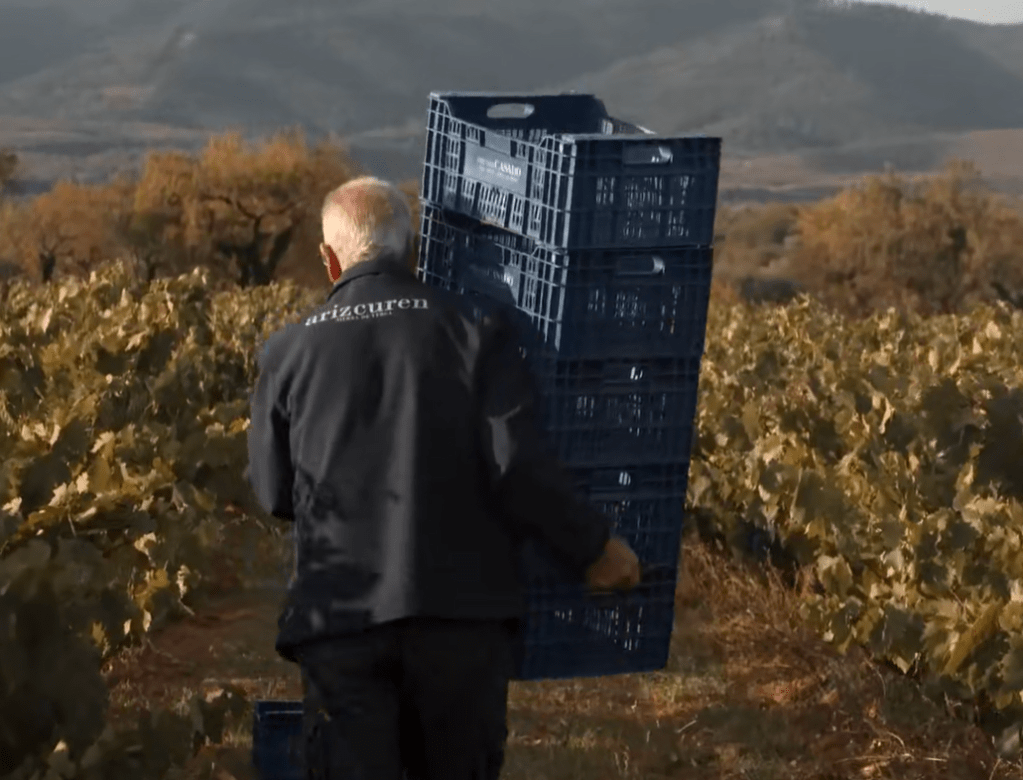
Client Spotlight | Arizcuren Bodega & Vineyards
I visited this tiny winery on a holiday in La Rioja and loved everything about the project, from reviving a forgotten winemaking industry in a city centre location to celebrating underappreciated grape varieties, and of course its regenerative approach to viticulture (oh, and wines, which feature on dozens of Michelin-starred restaurant wine lists). As many small independent businesses with tightly managed budgets do, the team originally used Google to generate the English version of their website, and the results really weren’t doing their fantastic project justice. So, when they invested in a gorgeous new website design, I was delighted that they asked me to craft them a fittingly sparkly English version.
What story am I telling? How am I telling it?
Are the two main questions I ask myself in a pre-translation Source Text analysis. I’m looking for what the client is particularly proud of and then weaving it together with my knowledge of what makes their new audience tick, to guide my choice of language as I translate. As well as its uniquely bijou and urban bodega and correspondingly small, artisan production, what really defines the Arizcuren project is neatly summed up by my favourite line from the source text, a quote from Javier Arizcuren; “Lo más innovador es, irónicamente, volver a las raíces” / “The most innovative approach is, ironically, to return to one’s roots.” As modern and new-fangled a term as regenerative viticulture may be, low intervention and allowing nature to balance itself is quite the opposite. As well as being rather poetic, this revival of tradition translates in winery tours that offer grape-to-bottle window on artisan wine production and tastings of exciting single-varietal wines that showcase forgotten and underappreciated minority grapes.
Can’t AI do it?
A little example of how AI doesn’t yet cut it when it comes to marketing copy. The very first heading on Arizcuren’s home page, “Somos Viñedo“, is translated by Google Translate as “We are a Vineyard”. Fair enough. That’s what it means. It sounds pretty weird to a native English speaker, though. As a quick experiment, I upped the ante and prompted an AI to translate it naturally for a winery website’s section heading. It came up with two suggestions; “We are Vineyard” (even weirder) or, “for a stronger sense of connection with the vineyard itself”, it suggested “We are the Vineyard” (just as odd as Google’s attempt). My human translation “We are our Vineyards” is only subtly different yet keeps that sense of the vineyard being at the heart of everything, whilst losing the weirdness.
If just a simple title can prove so tricky for AI, imagine how bizarre a whole page of AI-generated marketing copy could turn out. In fact, why imagine? Take an excerpt of copy from Arizcuren’s old, Google translated website.
“Good vinegrowers take the landscapes of their vineyard to the bottle and make us dream of those lands.”
Does it make grammatical sense? Just about, if we’re being generous and allowing a hefty chunk of poetic licence. Would any English-speaker ever say or write that? Absolutely not. What would be their typical reaction to reading that? A slight recoil. It sounds very over the top and melodramatic.
Creative language like marketing copy is tricky to translate well, even for humans (who are making conscious, creative decisions rather than essentially guessing based on lots of other texts). It can take a professional translator around double the time (sometimes more) to translate web marketing content compared with, say, a set of instructions or a contract. Yes, AI is free and fast, and very tempting, but if you want your English web copy to work as well for you as the carefully crafted original, and would rather not risk a website full of translations like the above gem, maybe just drop me a line.
 Adel(e)ante | Translation. Transcreation. Copywriting.