
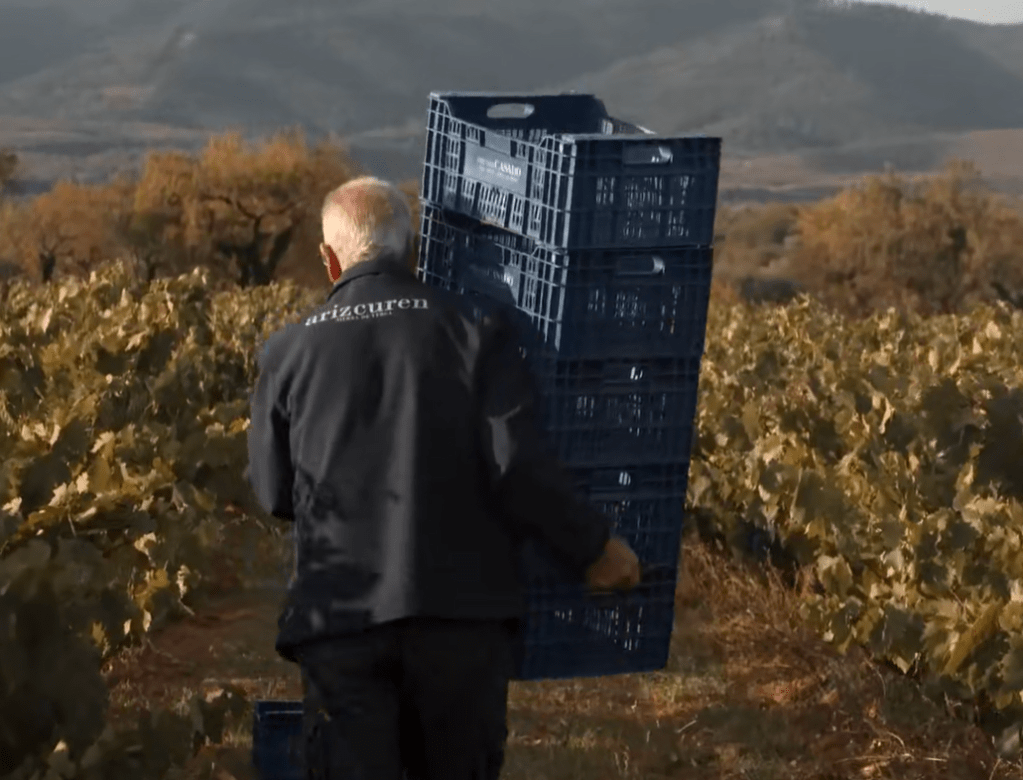
Client Spotlight | Arizcuren Bodega & Vineyards
I visited this tiny winery on a holiday in La Rioja and loved everything about the project, from reviving a forgotten winemaking industry in a city centre location to celebrating underappreciated grape varieties, and of course its regenerative approach to viticulture (oh, and the finished result – wines that feature on dozens of Michelin-starred restaurant wine lists). As many small independent businesses with tightly managed budgets do, the team originally used Google to generate the English version of their website, and the results really weren’t doing their fantastic project justice. So, when they invested in a gorgeous new website design, I was delighted that they got in touch and asked me to craft them a fittingly sparkly English version.
What story am I telling? How am I telling it?
Are the two main questions I ask myself in a pre-translation Source Text analysis. I look at what the client is particularly proud of and I weave this together with my knowledge of what makes their new audience tick, to guide my choice of language as I translate. In Arizcuren’s case, two key themes really jumped out.
Small and Artisan
Small winery, small production, big attention to detail. Arizcuren’s bijou bodega in Logroño’s city centre meticulously handles the entire winemaking and aging process by hand. This small-scale, high-craftsmanship production (25,000 bottles a year) not only produces critically acclaimed wines that the team are rightly very proud of but is a real treat for visitors, who get a wonderful, grape-to-bottle window on artisan winemaking in just a few hundred square meters.
Innovation and Tradition
Regenerative viticulture may be a relatively modern term, but low intervention and allowing nature to balance itself is quite the opposite. One of my favourite parts of the source text was Javier Arizcuren´s quote “Lo más innovador es, irónicamente, volver a las raíces” / “The most innovative thing is, ironically, to return to one’s roots.” What english-speaking visitors need to know, though, is that this ethos translates into a winery visit that’s a little different to others they’ll do in La Rioja. It’s a foray into doing things a little differently and a chance to discover minority grapes that have fallen out of fashion, showcased in Arizcuren’s exciting single-varietal wines.
Can’t AI do it?
As an example of why AI just doesn’t cut it when it comes to marketing copy, the very first heading on Arizcuren’s home page, “Somos Viñedo“, was translated by Google Translate as “We are a Vineyard”. Fair enough. That’s what it means. It sounds pretty weird to a native English speaker, though. As an experiment, I specifically asked an AI to translate it for a winery website, to give it some helpful context. It came up with two suggestions; “We are Vineyard” (even weirder) or, “for a stronger sense of connection with the vineyard itself”, it suggested “We are the Vineyard” (just as odd as Google’s attempt). To convey the same sense of vineyard being at the heart of everything the winery does, without any weirdness, required just a tiny tweak or two; “We are our Vineyards”. This simple possessive adjective, along with making vineyard plural ties everything together and makes far more sense.
If just a simple title can prove so tricky for AI, imagine how bizarre a whole page of AI-generated marketing copy could turn out. Using a human not only ensures that your copy sounds natural, but also brings contextual expertise and native cultural knowledge that lead to far more intelligent decisions on word choice. Don’t take the risk on AI with marketing copy. Get in touch if you’d like some Human Intelligence applied to yours.
 Adel(e)ante | Translation. Transcreation. Copywriting.